

How to Switch from Cigarettes to Disposable Vapes
Last Updated: November 16, 2026
Quick Summary
Switching from cigarettes to disposable vapes works best with a simple, sealed device that is strong enough to compete with a cigarette. Match your nicotine strength to how many cigarettes you smoke per day, replace each trigger moment rather than skipping it, and keep a spare sealed device so you never run out mid-week.
- A cigarette takes roughly 10 to 15 puffs, so a 20-a-day smoker needs about 200 to 300 puffs daily.
- Start at a higher nicotine strength than you think you need, then taper down over time.
- Running out of device mid-week is the most common cause of relapse when switching.
- By month two to three, aim for zero cigarettes on most days.
- Store devices away from direct sun, hot cars and heaters, and dispose of them as e-waste.
Table of Contents
- Why Disposable Vapes Suit a First Switch
- What Happens When You Switch from Smoking to Vaping
- Choosing Cigarette to Vape Nicotine Strength
- Your Step-by-Step Transition Plan with a Disposable Device
- Dual Use of Smoking and Vaping: What Counts as Success
- Australian Vape Laws and What They Mean for Your Switch
- Device Safety, Storage and Disposal Between Puffs
- Pick Your First Device and Start the Switch
- Frequently Asked Questions
Why Disposable Vapes Suit a First Switch
Switching from cigarettes to disposable vapes works best when the first device is simple, sealed and ready to use. The people who succeed are rarely the ones who buy the most complicated kit. They are the ones who remove friction on day one.
A disposable vape is a sealed, pre-filled device with no buttons to learn, no coils to change and no e-liquid to handle. You unwrap it, draw on it, and throw it away when the battery or liquid runs out. That simplicity matters when you are also managing cravings.
Here is the honest version. Cigarettes deliver nicotine fast because smoke carries it deep into the lungs. That gap is why a first device needs to be strong enough to compete with a cigarette, not a weak novelty.
Disposable devices also remove the two things that derail most quit attempts:
- No refilling, so no spills or wrong-strength mistakes
- No charging routine to forget, on most models
- No maintenance decisions while you are still adjusting
What a Disposable Device Actually Does Differently
The key difference is nicotine delivery and throat hit. A disposable with a high-strength salt nicotine formula gives a smoother inhale than freebase liquid at the same strength. That smoothness is what lets you take a proper draw instead of coughing.
If you have never used one, our guide to the IGET One 12000 puff device features and how to use it walks through the draw, the display and the turbo mode step by step.
Watch out: buying an unsealed or unlabelled device is the fastest way to waste money. Look for sealed packaging and a verifiable authenticity code.
Where the Evidence Stops and Honesty Starts
No one can promise you a painless switch. Vaping is not risk-free, and it is not a medicine.
That is a relative claim, not a clean bill of health. Long-term effects of vaping are still being studied. Treat this as harm reduction, not a cure.
Better Health Channel guidance on e-cigarettes
What Happens When You Switch from Smoking to Vaping
Common experiences include:
- A cough that briefly gets worse before it settles, as your lungs clear
- Changes in taste and smell, often within a week
- Irritation in the throat for the first day or two
- Feeling flat or restless while your routine resets
The cravings are the real test. Cigarette cravings tend to arrive in short, sharp waves that peak and pass within a few minutes. Vaping gives you something to do during that wave.
One insider point most guides skip: the hand-to-mouth habit is half the battle. A disposable device mimics the physical action of smoking, which is why it often feels easier than patches or gum.
Choosing Cigarette to Vape Nicotine Strength
Cigarette to vape nicotine strength is the single decision that most affects whether your switch sticks.
A 50mg/mL device is a high-strength option. It suits a heavier smoker, not a light one.
Matching Your Cigarettes Per Day to a Milligram Level
| Cigarettes per day | Starting strength | Notes |
|---|---|---|
| 1-5 | Lower strength or nicotine-free | You may not need high strength at all |
| 6-15 | Mid to high strength | Most common starting point |
| 16-25 | High strength | Take shorter draws at first |
| 25+ | High strength, monitored | Speak to a health professional |
Two rules matter more than the table. First, start higher than you think you need, then taper down. Second, if you feel dizzy or nauseous, stop for a while. That is a sign of too much nicotine, not too little.
Your Step-by-Step Transition Plan with a Disposable Device
A practical plan beats willpower, but a plan built around a disposable device needs to account for how disposables actually behave: fixed nicotine strength, a finite puff count, no refilling, and a battery that may or may not be rechargeable.
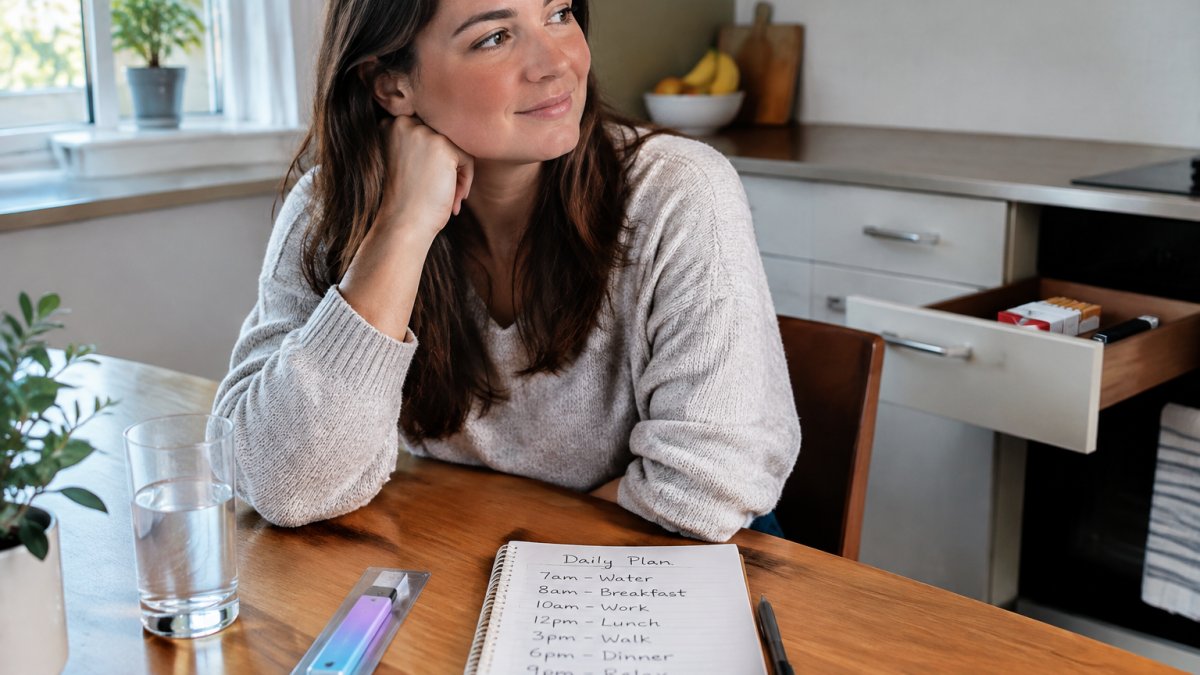
Total time: 4 weeks Difficulty: Moderate
What you'll need:
- One sealed disposable device at your chosen strength, plus one spare sealed device
- A written list of your usual smoking times and how many cigarettes you smoke at each
- A rough puff budget (see Step 1)
- Water, and something to do with your hands
Step 1: Map your triggers and your puff budget [Week 1] Write down the five moments you always smoke and how many cigarettes each involves. Then translate that into a daily puff estimate. A common pattern is that a cigarette takes roughly 10 to 15 puffs, so a 20-a-day smoker is looking at 200 to 300 puffs a day. Compare that to the device's stated puff count and work out how many days a single device should last. If the maths says a device will run out in under a week, buy the spare before you start, not after.
Step 2: Replace, don't remove [Week 1] At each trigger time, use the device instead. Do not try to skip the moment entirely. You are swapping the ritual, not deleting it.
Expected result: You vape at the same times you used to smoke, and you have a realistic idea of how long a device lasts.
Step 3: Drop the easiest cigarette first [Week 2] Choose the cigarette you care least about and cut it entirely. Keep the others replaced with vaping. This is where a disposable's fixed strength helps: you are not tempted to tinker with settings, so the only variable is how often you draw.
Step 4: Set a full switch date and protect the supply [Week 3-4] Pick a date and stop buying cigarettes. Keep the device within reach at all times, including in the car and by the bed. Keep the spare sealed device in a cool, dry place at home.
Step 5: Taper the strength, not the habit [Week 4+] Once you are comfortable, move to a lower strength. Keep the routine intact while the nicotine drops. Because disposables are sealed at a fixed strength, tapering means buying a lower-strength device rather than adjusting a dial, so plan the purchase before the current device runs out.
Watch out: running out of device mid-week is the most common cause of relapse, and it is worse with disposables because you cannot top up a sealed device or swap a coil. Keep a spare sealed one at home and check the puff count against your daily estimate before you commit to a full switch date.
Dual Use of Smoking and Vaping: What Counts as Success
Dual use smoking and vaping is common, and it is not failure. Most people do not switch in a single clean break. They overlap for weeks or months while the vaping habit takes hold. The unique angle most guides skip is that dual use is not a single state: it is a spectrum, and where you sit on that spectrum tells you what to do next.
The problem with dual use is that it keeps you exposed to cigarette smoke. Every cigarette you still smoke carries the tar and carbon monoxide risk you were trying to avoid. Vaping instead of that cigarette reduces your exposure; vaping alongside it does not. That is why the goal is a complete switch, not a permanent overlap.
So define success clearly, and track it by cigarettes, not by feelings. A useful benchmark:
- Week 1-2: Any reduction counts as progress
- Week 3-4: Cigarettes down by half or more
- Month 2-3: Zero cigarettes on most days
- Month 6: Complete switch, no cigarettes at all
To make that benchmark mean something, keep a simple daily count. Each evening, write down the number of cigarettes you smoked and roughly how many puffs you took. After two weeks you will see a pattern: some people vape heavily but still smoke at two or three fixed trigger times, which tells you exactly which routines to target next. Others find their cigarette count is not falling at all, which usually means the nicotine strength is too low or the device is running out at the wrong moment.
A common pattern is that dual use persists because the device is not available at the moment of the craving, not because the device is wrong. If your count shows cigarettes clustering at work, in the car or first thing in the morning, fix the access before you change the strength.
If you are still smoking heavily after three months, that is worth a conversation with a health professional. It is information, not a verdict. Bring your daily count with you; it is more useful to a practitioner than a general impression of how the switch is going.
Australian Vape Laws and What They Mean for Your Switch
Australian vape laws have changed, and they affect how you buy. Check the current requirements with the Therapeutic Goods Administration before you order.
In practice, this means availability varies by state and territory, and rules differ on where devices can be sold and how they must be labelled. Do not assume an online listing is legitimate just because it appears in a search.
TGA guidance on vaping and e-cigarettes
Before you buy, check three things:
- Whether the seller operates lawfully in your state or territory
- Whether the device is sealed and carries an authenticity code
- Whether the nicotine strength is clearly stated on the packaging
Device Safety, Storage and Disposal Between Puffs
Battery safety is not a small detail. Disposable devices contain a lithium cell, and heat is the enemy.
Store your device away from direct sun, hot cars and heaters. Keep it upright and keep the mouthpiece clean. Do not puncture, crush or try to recharge a device that is not designed for it.
Our guide on how to store vapes to make them last longer covers the practical routine in more detail.
When a device is finished, dispose of it responsibly. Do not put it in household recycling. Check with your local council for e-waste or battery drop-off points, because the lithium cell needs separate handling.
Sustainability Victoria battery disposal guidance
Pick Your First Device and Start the Switch
Your first device should be simple, sealed and strong enough to compete with a cigarette. Everything else is detail.
Our pick for a first switch is the IGET Bar Pro Dynamic Mint. It delivers up to 10,000 puffs, uses a mesh coil for consistent flavour, and has a rechargeable battery so it does not die early. At $55.00, it is a low-risk way to test whether a disposable suits you. The cool mint profile also gives a clean throat hit, which many ex-smokers find easier than sweet flavours.
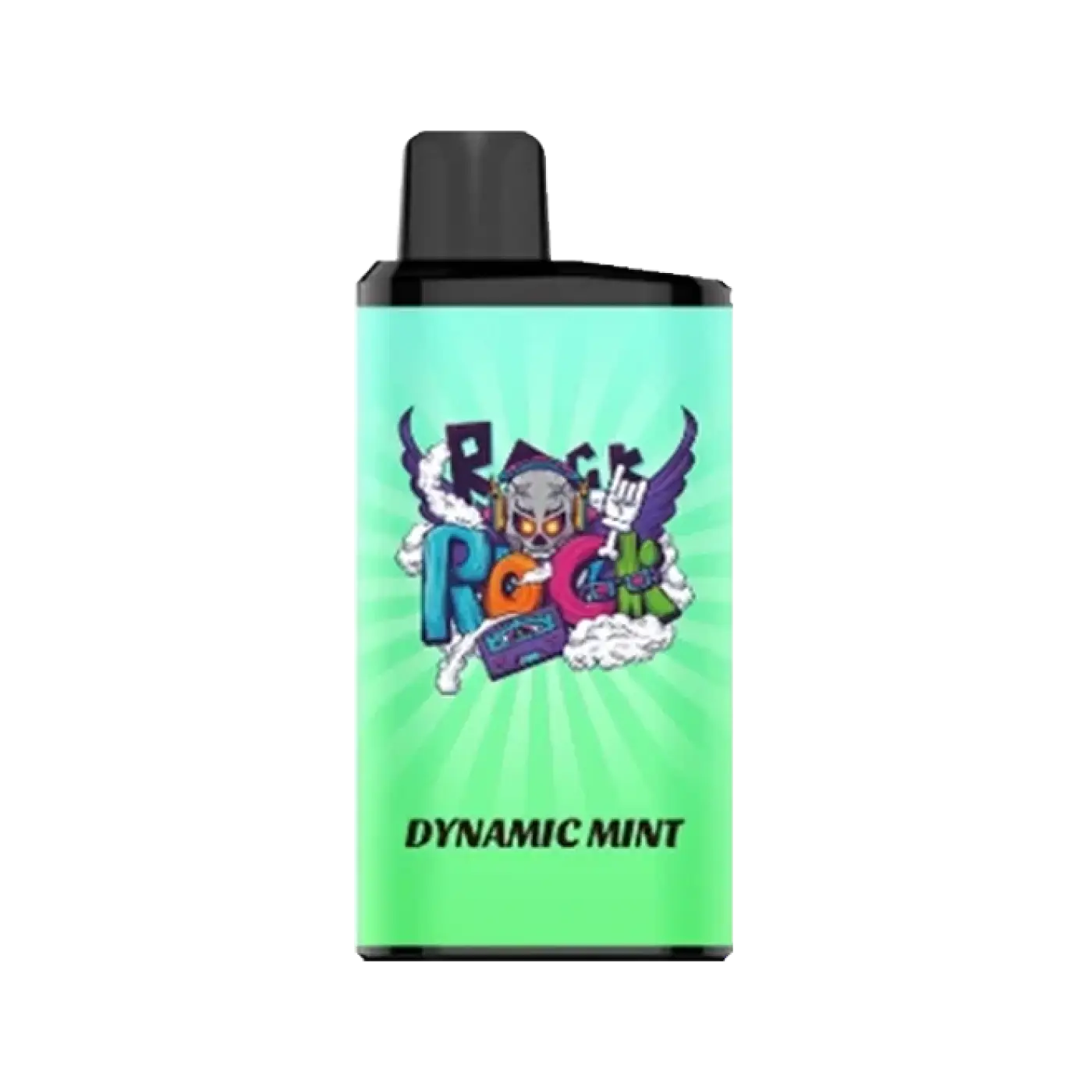
For a longer run between purchases, the IGET One Mountain Spring Mint Ice offers up to 12,000 puffs with a digital display and turbo mode, at $65.00. If you want to compare options on lifespan before committing, read our guide to choosing long lasting disposable vapes.
Before you buy from any seller, learn how to identify fake IGET products. Counterfeits are the biggest reason people get burned.
At iget express, every device is sealed, authenticity-verified and dispatched same-day from our Australian warehouse in discreet, unbranded packaging. We offer free express shipping on orders over $150 and secure payment processing.
The hardest part of switching is not the first puff. It is the third week, when the novelty fades and the old routine calls. That is where a reliable supply and a device you trust make the difference. Get started with iget express and keep a genuine device within reach, with same-day dispatch, verifiable authenticity codes and free express shipping on orders over $150.
Frequently Asked Questions
Can switching from cigarettes to disposable vapes help you quit smoking?
It can help, but it is not a guaranteed quit method. Disposable vapes deliver nicotine without cigarette smoke, so they remove the tar and carbon monoxide exposure that drives much of smoking's harm. Many people find the hand-to-mouth routine and throat hit easier to replace with a vape than with patches or gum. Success depends on picking a nicotine strength that controls cravings, committing to a full switch rather than dual use, and having support. Speak to a health professional if you want a structured quit plan alongside the device.
How do you choose a nicotine strength when switching to vaping?
Start from your cigarettes per day. A pack-a-day smoker usually needs a higher milligram level than someone on five cigarettes, because a disposable delivers less nicotine per puff than a cigarette. The devices stocked by iget express, including the IGET Bar Pro and IGET One, are listed at 50mg/mL, which suits heavier smokers but can feel strong for light smokers. If you feel jittery or get headaches, puff less often; if cravings persist, you may need more frequent sessions rather than a stronger device.
Can you smoke and vape at the same time while switching?
You can, and most people do for a short period. Dual use of smoking and vaping is common in the first few weeks while your routine adjusts. The risk is that it becomes permanent: you keep the cigarettes you enjoy and use the vape only where smoking is inconvenient, so your smoking frequency never drops. Set a clear definition of success, such as no cigarettes before lunch within two weeks, and track it. If dual use continues past a month, change your approach rather than waiting.
What are the rules for buying and using vapes in Australia?
Australian vape rules are set at federal and state level and change over time. Check the current requirements with the Therapeutic Goods Administration and your local health department before ordering.
